Denver’s light has a particular quality to it. At 5,280 feet, the air is thinner, UV is harsher, and snow reflects night light like a mirror. Thoughtful outdoor lighting in this setting has to work with those conditions, not against them. Done well, it makes a garden feel welcoming when the sun drops behind the Front Range, reveals safe paths through freeze-thaw seasons, and does it with low energy and long-lived materials. Done poorly, it glares into neighbors’ bedrooms, washes the night sky, and burns through fixtures in a couple of winters.
I’ve spent two decades specifying, installing, and maintaining colorado outdoor lighting, much of it in and around Denver. The projects that hold up and look good five or ten years later share the same DNA. They match materials to the climate, size light thoughtfully, and use controls that react to seasons, snow cover, and human use. They also treat darkness as part of the design. That is where sustainability begins.
What the Mile High climate does to outdoor fixtures
Altitude changes the math in subtle ways. UV at elevation accelerates the breakdown of plastics and powder coats. Acrylic lenses that look fine in a coastal catalog can haze or craze in two or three years here. Cheap black finishes chalk to gray. Denver’s winter adds thermal cycling: a warm afternoon, then a sudden plunge at dusk, ice by dawn. If you mount a thin-cast fixture directly to stone, that movement can loosen fasteners or open seams that wick in meltwater. Add deicing salts and you have corrosion.
Choose materials and finishes with that in mind. Marine grade stainless (usually 316) resists road salt better than 304. Cast bronze and copper form protective patinas that don’t flake, so they age gracefully. High quality, low-porosity aluminum with a multi-coat architectural powder finish can last a decade or more if properly grounded to avoid outdoor lighting installation galvanic corrosion. For lenses and diffusers, UV-stabilized polycarbonate is tougher than acrylic when snow shovels and kids’ bikes enter the picture, while borosilicate glass holds clarity and resists heat.
It is not only winter that tests denver outdoor fixtures. Hail is a genuine risk. I have seen hail stones punch through thin glass on wall lanterns in Baker and put spider cracks in cheap path lights in Park Hill. If you light a patio where hailstorms roll through, look for impact ratings or choose heavy glass and robust housings.
The light itself, and how to keep it respectful
Night in this region is not as dark as it looks on a moonless night. Fresh snow can reflect 50 to 80 percent of light. A 3 watt path light that reads subtle in September can look stark in January against a white yard. That is why fixed-output systems, even efficient ones, often miss the mark by spring.
In practice, sustainable denver landscape lighting balances three things: modest lumen levels, warm or amber color where possible, and tight optical control. On a typical property, you can light most paths and plantings with fixtures in the 2 to 5 watt LED range apiece, using optics that spread light evenly across the surface you care about and nowhere else. Shielding and full cutoffs, especially for wall and area lights, prevent throw into neighbors’ windows. Warm CCT around 2700 K feels natural on stone and wood. If your garden edges meet open space, consider 2200 K or filtered amber sources near those boundaries to be kinder to nocturnal wildlife.
Dark-sky guidance is common sense here. Keep pole heights low, often 18 to 30 inches for path lights and 8 to 12 feet for area lighting, depending on task. Aim lights downward. Avoid uplighting eaves unless there is a specific architectural reason and you can shield spill. When accenting trees, limit the number of beams and stop them at the canopy, not into the sky. During bird migration along the Front Range, simple measures like dimming façade lights or switching ornamental lighting off after midnight make a real difference.
Power, controls, and the case for low voltage
Low-voltage LED has become the backbone of landscape lighting denver because it fits the terrain, uses very little energy, and keeps maintenance accessible. A well-planned 12 or 24 volt system with efficient drivers will sip power while delivering consistent output over long cable runs. On a small urban yard, I might land a transformer at the garage, pull a single trunk line through a conduit sleeve that was installed with the irrigation, and then feed short branches to zones: steps, beds, a tree accent, a small water feature. On larger properties, I split loads among multiple transformers to keep voltage drop under control and to create zones that are easy to manage.
Power quality matters more than many think. Cheaper drivers flicker on dimmers, or they lose output in winter. Good constant-current drivers that hold regulation to minus 20 degrees Fahrenheit maintain light level on the coldest nights. Inside the transformer cabinet, I prefer magnetic over electronic in Denver’s climate. Electronic models can work well, but they are more sensitive to surge and moisture, and they do not always play nicely with long cable runs. A durable, stainless or powder-coated steel enclosure with drain holes kept above typical snow drift height reduces condensation.
Controls are where sustainability becomes visible. Astronomical timers align on-off times to sunrise and sunset without a light sensor that can be buried by snow. Motion sensors on side yards or alley-facing zones keep denver exterior lighting off until it is needed for passage or security. Step lights and denver pathway lighting can run at 30 to 50 percent most of the night and bump to full when someone approaches. In practice, that trims energy use while improving perceived safety.
Wi-Fi or mesh-controlled modules are useful, but I treat them as a layer, not the backbone. When the internet hiccups, you still want the system to function. Hard-programmed astronomical clocks and local occupancy sensors do not depend on a cloud server.
Solar in Denver, with caveats
Outdoor lighting colorado gets pitched on the strength of sunshine. Denver does well on clear days, especially in the shoulder seasons when the sun sits high and the air is dry. That sets up solar as a legitimate option for certain denver outdoor lights, but not a universal fix.
Integrated solar path lights look tidy on day one, then a winter later have cloudy panels and tired batteries. If you go solar, separate the panel from the fixture and mount it with the right tilt for winter sun, not summer. Battery performance drops with cold. Lithium iron phosphate (LiFePO4) chemistries handle cold better than many lithium-ion packs and last through more cycles, while sealed lead-acid batteries are inexpensive but heavy and short-lived. Snow cover on panels is not a minor issue. A one-inch layer can knock production down to near zero until it slides off. Angling at 45 to 60 degrees for winter helps shedding.
I personally limit solar to remote areas where trenching would scar a mature garden or where line power is impractical. Small bollards in a meadow trail in Stapleton, for example, with panels tucked above tall grasses on a south fence line, made sense. For a front walk or a patio where reliability counts and trees may leaf out, I prefer wired low voltage with high-efficiency LEDs.
Materials that last, and those that do not
Material choice is the difference between a system you enjoy and a maintenance project. Over the years, I have developed preferences by watching what fails.
- Bronze and copper develop character and resist corrosion. Path lights with spun copper hats survive hail and can be re-lamped or re-drivered a decade later. Yes, they cost more up front. Over a 15 year period, they often cost less than replacing powder-coated aluminum fixtures twice. 316 stainless holds polish and resists pitting when it is genuinely 316 and not an imported blend. If you live near busy streets with winter salt spray, it will outperform 304. It does show fingerprints, so for hand-height fixtures I specify satin finishes. Aluminum is a strong choice when it is well cast, powder coated in multiple steps, and paired with stainless fasteners. Avoid thin-cast bodies and mixed-metal screws that seize or corrode at threads. Recycled-content aluminum is increasingly available from reputable manufacturers and can cut embodied carbon meaningfully. Composites and engineered polymers have a place. Heavy-duty glass-fiber reinforced polymers do fine with UV and hail, particularly for bollards and step lights where salt and water pool. Cheap plastics are not the same thing. If a sample feels flimsy in your hand, it will not improve outside. Wood, if you love the look, should be thermally modified or dense hardwood with an oil finish that you will maintain. I have integrated thin LED lines into cedar benches in Wash Park with good success, but only where the owner agreed to clean and oil them twice a season. If that sounds burdensome, it is. Many people underestimate maintenance on wood outdoors here.
Finishing details also separate keepers from headaches. Double gaskets on lens housings, stainless hardware throughout, and drain pathways inside fixtures help them breathe. Field-serviceable designs with accessible drivers mean you do not toss an entire luminaire when a $30 component ages out.
Designing light for Denver yards and streetscapes
Every site tells you where the light belongs. In a Sloan’s Lake bungalow, the front walk may be three feet wide with a street tree arching overhead. There, modest bollards or low shielded path lights spaced twelve to fifteen feet apart keep the plane of the walk readable without lighting the neighbor’s living room. House numbers read with a single 1 watt mini spot, not a lantern at eye height.
Back yards often serve several roles at once. A dining terrace, a grill station, a patch of grass for a dog, some planters or a vegetable bed. I tend to break these into zones. Under-counter LED strips at 2200 to 2700 K for the grill and counters, with diffusers to hide diodes. Narrow-beam accents on a specimen serviceberry, staying within the canopy rather than blasting past it. Soft washes on the fence only where the patio meets it, leaving the rest dark so the eye is drawn inward. For steps, a three or four inch wide LED step light at low output every other riser, or a micro downlight mounted in the stringer to graze the tread. The goal is to make stairs legible, not decorative.
In alley-facing garages and carriage houses, denver exterior lighting should avoid glare for drivers and cyclists. Full cutoff wall packs or sconces that throw light down the door plane, paired with motion sensors tuned to people not passing cars, keep alleys functional and quiet. Many older fixtures still use bright white lamps. Swapping to warm LED and adding a hood can change the way a whole block feels.
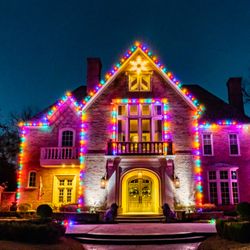
As for the front façade, it is tempting to wash brick or stone from grade to eave. Restraint saves energy and preserves architectural detail. A couple of narrow accents on columns or the face of a gable can sketch the form without becoming a beacon.
Energy, codes, and reasonable targets
A typical single-family property in the city might run 100 to 300 total LED watts across all denver outdoor lighting, depending on size and ambition. On a 6,000 square foot lot with a front walk, a back patio, and a few accents, it’s common to land under 150 watts while achieving a comfortable feel. That draw, running four to eight hours per night with adaptive dimming and motion, adds a modest bump to the electric bill.
Local energy codes tend to be more focused on commercial exteriors, but the principles apply: limit uplight, cap lumens per square foot, use controls. If you are in an HOA or historic district, additional rules may govern fixture style and output. Denver and many Front Range municipalities encourage dark-sky practices even when they are not strict mandates. Contractors familiar with outdoor lighting installations denver will generally know how to thread those needles.
Commercial and multifamily denver lighting solutions bring their own layers. Garage lighting should use occupancy controls that dim to a safe background level. Pathways on campuses and along the Cherry Creek or South Platte trails benefit from cutoff optics and consistent low-level illumination, not high poles at long intervals. For retail façades, accent the entry, not every square foot of wall.
The sustainable project lifecycle
True sustainability is not only what you install, but how you keep it going and how it ends its life. The best denver lighting systems share qualities that make that lifecycle easier.
- Start with a real plan, not a cart full of fixtures. Walk the site at dusk. Identify tasks and focal points, and decide what to leave dark. Sketch zones, mounting heights, and cable paths that avoid tree roots and hardscape footings. Specify fixtures you can service. Ask for part numbers on replacement drivers, LEDs, lenses, and gaskets. If a manufacturer glues a driver shut, look elsewhere. Install so someone can maintain it. Use junction boxes that are accessible, not buried under mulch. Create drip loops, elevate connections out of low spots, and backfill trenches with clean sand around cable to reduce damage if a future gardener digs. Document everything. Snap photos of trenches before backfilling. Label transformer circuits. Your future self, or a new homeowner, will thank you. Build in future flexibility. Run an extra conduit sleeve under a path. Leave capacity in a transformer. Plantings grow, needs change, and if the bones are flexible, you avoid ripping things up later.
Running wires and fighting the freeze
The physical installation separates tidy, lasting work from short-lived jobs. Conduit sleeves under walkways and drive, ideally installed alongside irrigation at the time of hardscape work, pay for themselves on day one. If you missed that window, it is still worth coring a sleeve rather than slot cutting and patching concrete later.
On depth, follow local code and common sense. You want cable below the zone where shovels and aerators roam, and deep enough to avoid frost movement where practical. In many Denver yards, that means eight to twelve inches for low voltage cable in beds and deeper under turf where aeration is expected. Where the cable crosses seasonal drainage paths, use conduit to prevent abrasion. For line voltage, consult the code and an electrician, and typically place conduit below the local frost line.
Connections deserve care. I use silicone-filled, gel-sealed connectors rated for direct burial, and I avoid making splices inside fixtures. Moisture travels. If you create a branch, seal it well and keep it accessible. Transformer placement should consider snow drift patterns. Against a south fence that sheds snow, you may want to mount it a foot or two higher to keep vents clear in winter storms.
Light where feet land and eyes look
Safety lighting has a simple goal: make the surface legible. That rarely requires bright fixtures. On steps, consistent, low light on treads helps people read depth. For denver pathway lighting, even pools that slightly overlap are easier on the eye than hot spots every six feet. On driveways where cars back out onto tight streets, bollards with full cutoff optics along the apron can help drivers judge edges without shining at oncoming traffic.
I often light handrails from below with narrow LED strips tucked into a cove, or with tiny downlights under the cap aimed at the grip zone. It keeps the rail visible in snow and provides just enough guidance for hands on cold nights.
Landscaping and light live together
Plant selection changes lighting needs more than many expect. Native and xeric plantings, common in denver garden lighting, sway in wind and grow in unexpected ways. I keep path fixtures as far from mower and trimmer zones as possible and leave room for grasses to flop without blocking light. For tree uplighting, I prefer to set wells a foot or more off the trunk where possible so roots breathe and the fixture does not get swallowed as trunks grow. In heavy irrigation zones, stake-mounted accents with risers can be lifted and repositioned as perennials fill in.
Mulch and stone shift. A path light’s riser that looked perfect in spring can be too low by fall when mulch compacts. Build adjustability in, and plan a spring tune-up to raise or re-aim as needed.
Color and mood at elevation
The choice between 2200 K, 2700 K, and 3000 K LEDs matters more outside than many think. At altitude, with clear air and neutral stone, 2700 K tends to render materials warmly without making snow look dingy. If you have a lot of red brick or cedar, 2200 K can be beautiful on accents and under counters. Reserve 3000 K for places where slightly crisper light helps tasks, like a grill head or a workshop door, and use it sparingly to avoid a patchwork feel. Mixing too many color temperatures in one view creates a visual buzz that reads as cheap.
Dimming shifts mood more than color temperature does. A patio that feels too bright at 8 pm settles in at 50 percent by 10 pm. Astronomical clocks can step zones down late into the evening. Guests will not notice the change, but your plants and power bill will.
Repair, replace, or retrofit
Many homes already have fixtures. Some are handsome but inefficient. Others are harsh or failing. In denver outdoor lighting retrofits, I try to keep what is solid and improve what is not.
If a classic bronze path light housing is sound but the halogen lamp is dated, retrofit with a high quality LED bi-pin that respects the original optics. Not all retrofit lamps are equal. Look for ones with low flicker, good thermal paths, and appropriate beam angles. If a wall lantern throws light into the sky, add a top shield or swap to a fixture with a solid cap and better optics rather than cranking down the lamp wattage.
Where wiring is suspect or poorly done, it is often better to re-run than patch. GFCI protection on line-voltage circuits feeding exterior transformers is not negotiable. Surge protection at the panel or at the transformer extends driver life when summer storms roll through.
A realistic look at cost and payback
Sustainable denver lighting costs more up front than a big-box cart full of disposables. A small, well-built low-voltage system for a front and back yard might land in the low to mid five figures including quality fixtures, a robust transformer, controls, and professional installation. A DIY path with a dozen mass-market stakes might cost a few hundred dollars. The difference shows up over time. The professional system draws 100 to 200 watts and runs for years with minimal attention. The stakes cloud over and march toward the trash.
Energy savings from LEDs are real but modest in absolute dollars given the low wattage. The greater payoff is durability, lower maintenance, and a yard that does not annoy neighbors or wildlife. When I have revisited projects after eight or ten years, the owners who invested in good denver outdoor illumination still use and enjoy their spaces at night. That is a return that does not fit neatly on a spreadsheet.
When to bring in a pro
There is nothing wrong with laying a few simple path lights yourself. For more complex denver lighting solutions, professionals earn their keep by preventing mistakes that are expensive to fix. They know sightlines, where glare lives, how snow and plants will change a layout, and how to distribute loads across transformers so voltage stays even. They also carry the right connectors, sealants, and tools that keep water out and light on.
If you do hire, ask to see night photos of their work, not just daytime installs. Have them walk you through a sample denver outdoor lighting systems denver spec sheet so you know what is serviceable and what is disposable. A good contractor will welcome that conversation.
A short planning checklist for Denver homeowners
- Walk your property at dusk to spot hazards, focal points, and places to leave dark. Choose warm CCT LEDs, typically 2700 K, with dimming for winter snow glare. Favor bronze, copper, 316 stainless, or high-grade powder-coated aluminum with serviceable drivers. Use astronomical timers and motion sensors, and zone lights so you can dim or turn off sections late. Document cable routes and leave spare conduit and transformer capacity for future changes.
Keywords you might search, realities you will live
People search for landscape lighting denver or exterior lighting denver expecting a catalog of denver outdoor lights. The reality on site is about soil, snow, and neighbors. Outdoor lighting in denver needs to be smaller than you think and smarter than a timer alone. Denver yard lighting does not need to flood your lawn. Denver pathway lighting works best when it invites feet forward without drawing the eye. Outdoor denver lighting that respects the night sky feels comfortable rather than heroic.
There are solid outdoor lighting services denver can offer, and plenty of outdoor lighting installations denver that show restraint and skill. If you want denver lighting to serve you, put the site and its climate first. Start with sustainable materials that do not mind hail and salt. Then choose methods that let light work just when and where it is needed, and nowhere else.
When you get that balance right, you keep the stars visible on crisp winter nights and your steps safe on icy mornings. Your garden feels alive after sunset, and your fixtures age into the space rather than fighting it. That is the quiet promise of thoughtful, sustainable outdoor lighting denver.
Braga Outdoor Lighting
18172 E Arizona Ave UNIT B, Aurora, CO 80017
1.888.638.8937
https://bragaoutdoorlighting.com/